Science
Wayne RESA science consultants are here to support Teachers, Instructional Coaches, Principals, Curriculum Directors...any educator that works to support students in their learning journey. Please contact us for any support with the resources on this site including curriculum, instruction, assessment, and professional learning.
Resource Highlights

Next Generation Science Standards (NGSS)
On Tuesday, Nov. 10, 2015, the Michigan Board of Education voted to adopt the Michigan Science Standards by a vote of seven to one. Michigan, one of the original lead states, is the 17th state to have adopted the Performance Expectations from the Next Generation Science Standards. The Michigan Science Standards are the performance expectations from the Next Generation Science Standards.
To learn more about the NGSS please see the tabs below. If you are new to the standards, we recommend you visit each link sequentially.
A Framework for K-12 Education
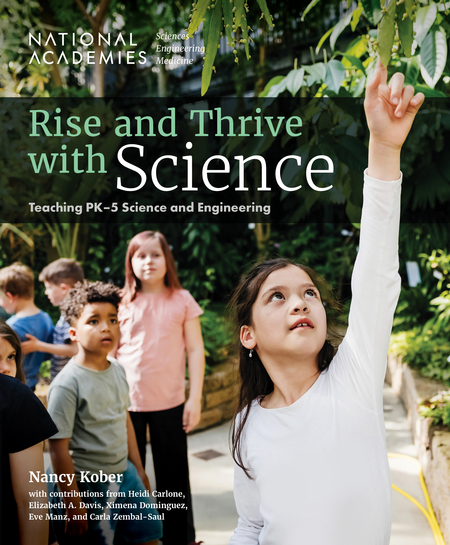
"A Framework for K-12 Science Education" is available online for free. It describes the major practices, crosscutting concepts, and disciplinary core ideas that all students should be familiar with by the end of high school, and it provides an outline of how these practices, concepts, and ideas should be developed across the grade levels. The Framework is grounded in the most current research on science and science learning and was the first critical step in the development of the Next Generation Science Standards (NGSS). As a matter of fact, the language of the NGSS performance expectations; comprised of Science and Engineering Practices, Crosscutting Concepts, and Disciplinary Core Ideas - comes DIRECTLY from the Framework!
While it is unlikely you will read the Framework from cover to cover, it is well worth your time as an educator to seek answers to many of your questions about what is meant by specific NGSS related language in this document. For example, you might be asking yourself: "What is 3D teaching and learning all about?", "Why did we need a new set of standards in Michigan?", "What does Equity have to do with science instruction?"...and many more questions.
One of our favorite quotes from the Framework
"The overarching goal of our framework for K-12 science education is to ensure that by the end of 12th grade, all students have some appreciation of the beauty and wonder of science; possess sufficient knowledge of science and engineering to engage in public discussions on related issues; are careful consumers of scientific and technological information related to their everyday lives; are able to continue to learn about science outside school; and have the skills to enter careers of their choice, including (but not limited to) careers in science, engineering, and technology."
- National Academies of Sciences, Engineering, and Medicine. 2012. A Framework for K-12 Science Education: Practices, Crosscutting Concepts, and Core Ideas. Washington, DC: The National Academies Press.
Michigan Science Standards are the Performance Expectations
The complete Next Generation Science Standards (NGSS)(opens in new window) are available for download.
How to Read the Next Generation Science Standards
Is There a Process that will help me Unpack the new Michigan Science Standards
You may want to first unpack the Disciplinary Core Ideas (DCIs).
- Access the Disciplinary Core Ideas(opens in new window) in your grade-level or course and click on "Search the Standards".
- Select "Standards By Topic" (this is how Michigan is organizing the standards).
- Scroll down and select your grade span. Next, click on the science topics you are interested in and you will see all your Performance Expectations (PEs) listed.
- Each PE is composed of all three dimensions. The dimensions associated with the PE are displayed in boxes below the PE. The orange box in the middle is the Disciplinary Core Idea. When you click on this DCI, it will take you to the explanation of this target found in the book A Framework for K-12 Science Education: Practices, Crosscutting Concepts, and Core Ideas(opens in new window). This explanation is what the DCI is based on.
- Please also take into consideration the Science and Engineering Practices and the Crosscutting Concepts. To get a complete picture of the Science and Engineering Practices, please read the book A Framework for K-12 Science Education: Practices, Crosscutting Concepts, and Core Ideas(opens in new window). You may also want to read the appendices. Please see the information below that describes how to access the appendices.
Curriculum
All aspects of K-12 science programs must be aligned with the Michigan Grade Level Content Expectations and the Michigan Merit Curriculum. Expectations should be implemented within and across grade levels to meet or exceed the standards and expectations. In 2015, the Michigan Department of Education adopted "The Michigan Science Standards," which are the Next Generation Science Standards(opens in new window).
Graduation Requirements
The Michigan Department of Education states:
"at least 3 credits in science that are aligned with the subject area content expectations developed by the department (State Department of Education) and approved by the state board under this section."
The interpretation is that students who graduate should master all of the state science standards, which are the Michigan Science Standards (MSS). These are identical to the Performance Expectations (PEs) from the Next Generation Science Standards (NGSS).
It is important to recognize that our standards domains include: Life Science, Physical Science, and Earth and Space Science.
In secondary education, we commonly see course sequences of Biology, Chemistry, and Physics. So the question is: "How do we ensure ALL standards for ALL students?"
Potential Solutions
- Create a plan to shift your course sequence.
- Develop/Adopt curriculum that integrates Earth and Space Science throughout.
- Create multiple opportunities, including electives, that ensure ALL standards are met.
For example, the course sequence below distributes Earth Science Performance Expectations throughout several courses:
- Physics (Astronomy)
- Chemistry Earth Systems (Geology, Weather, and Climate)
- Biology Earth Systems (Environmental, History of Earth)
- Optional Advanced Science Courses (AP, IB, H, Dual Enrollment)
Explore other course sequencing options by reading Appendix K of the NGSS on the Next Generation Science Standards website(opens in new window).
Michigan Department of Education Science Model Course Resource: Model Course Mapping Resource(opens in new window)
How do I find the Performance Expectations that I'm required to teach?
To search for your performance expectations in your grade-level or course, visit the NGSS website(opens in new window). Then follow the procedure described in the update above, "Aligning Curriculum for Next Year."
How does CTE fit in?
The Science Course / Credit Requirements(PDF, opens in new window) states that, for science, there is some flexibility with these three credits. From the document:
SCIENCE GRADUATION REQUIREMENT – 3 Credits
- Proficiency in State Content Standards for Science (3 credits); OR
- Beginning with the Class of 2015: Proficiency in some State Content Standards for Science (2 credits) and completion of a Department-approved formal Career and Technical Education (CTE) program (1 credit).
Thus, a student may fulfill the requirement for the third Science credit by completing a formal CTE program or curriculum. If the third Science credit is exchanged for a formal CTE program, then science content does not need to be integrated. However, districts are responsible for ensuring that students have an opportunity to learn the content as outlined in the Michigan Science Standards, since these will be tested on the 11th-grade Michigan Merit Exam.
Important: If the CTE course is not completed successfully, then the student is not only missing the CTE credits, but they will still be short a third credit of science.
Need More Information?
The Michigan Department of Education has an FAQ page for Science(opens in new window).
Curriculum Considerations
- Wayne RESA is now making complete grade-level courses available through Atlas Rubicon, a curriculum management tool. The courses are aligned to the present Michigan Science Grade Level Content Expectations. They have been developed through consortia led by Oakland Schools and the Michigan Association of Intermediate School Administrators.
- NGSS Overview for Principals(PDF, opens in new window)
- Michigan Merit Curriculum(PDF, opens in new window)
Implementing the Michigan Science Standards
Next Generation Science Standards (NGSS) Resources
What is all this NGSS stuff anyway? If you are new to NGSS, or like many of us, still trying to wrap your head around all the changes, you may find this NGSS Padlet(opens in new window) useful. It contains a great number of resources organized by these categories:
- How is NGSS different?
- What is Phenomenon?
- What are Driving Questions?
- What are Academic Conversations? (Argumentation)
- What is Modeling?
- How can administrators support teachers?
Free K-12 NGSS Aligned Curriculum
Are you looking for Free K-12 NGSS aligned curriculum(opens in new window)? This Padlet has links to curricular materials and other resources. Please do not assume that all these materials are three-dimensional. Please use the three rubrics included in this Padlet to evaluate these resources.
Do you need help in designing your science curriculum to meet the changes in the Michigan Science Standards? If so, you may want to use the new Curriculum Coherence Document developed at Wayne RESA. The purpose of the document is to help you save time as you navigate through the curriculum process.
For support in developing a curriculum implementation plan and the professional learning that will support adoption/implementation, please reach out to Wayne RESA Science Consultants.
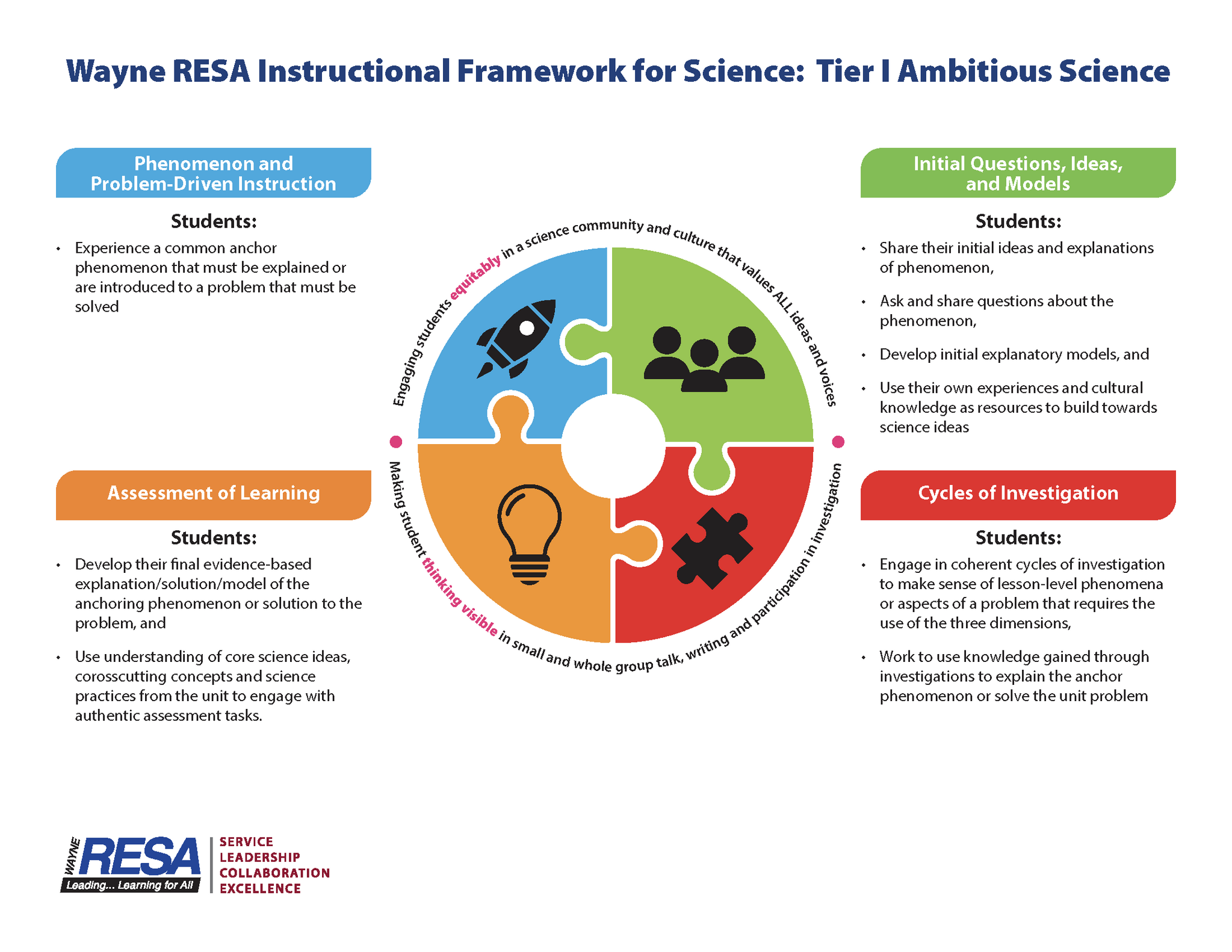
Instructional Framework: Tier 1 Ambitious Science Instruction
NGSX @WAYNE RESA: Next Generation Science Exemplar
Professional Learning Opportunity: Nationally Developed, Locally Implemented
Have you signed up for one of our NGSX cohorts? To understand how this professional learning will support your implementation of the new science standards, watch this science standards video(opens in new window).
Learn more about the storyline tools(opens in new window) along with some sample storylines and associated lesson plans.
The Michigan Science Standards and the NGSS Require Tools for Ambitious Science Teaching
View the Ambitious Science Teaching website(opens in new window). Great teaching can be learned. This website provides tools and resources that support ambitious science instruction at the middle school and high school levels. Ambitious teaching deliberately aims to get students of all racial, ethnic, and class backgrounds to understand science ideas, participate in the discourses of the discipline, and solve authentic problems.
The framework describes four core instructional strategies that support this kind of teaching. These “high-leverage” practices make up the Science Learning Framework and have been selected based on extensive research on how young people learn science, authentic forms of science activity, and how teachers learn to appropriate new practices.
NGSS Professional Development Workshops From Create for STEM
Getting to Know the Next Generation of Science Standards is a set of training materials being developed by partners from the CREATE for STEM Institute at Michigan State University and Michigan NGSS External Review Team members. These materials are designed for use by trainers providing professional development about the Next Generation of Science Standards (NGSS) to teachers. The training materials are in-depth and incorporate instructional components, including activities to support teachers' interaction with the content.
As indicated below, some workshops are complete and available for use, some are in development, and some are currently undergoing review by members of the Michigan NGSS External Review Team. The next step will be to pilot the materials. In the future, these materials will be housed as part of a common website with rich video material and resources.
Bozeman Science and the NGSS
Have you heard of Bozeman Science? Paul Andersen maintains the Bozeman resources and is the creator of The Wonder of Science(opens in new window). With over 20 years of experience teaching science in Montana, Paul was the 2011 Montana Teacher of the Year and a finalist for National Teacher of the Year.
His video series covers the essential concepts contained within the K-12 Science Framework, unpacking the three dimensions of the NGSS: the eight Practices, seven Crosscutting Concepts, and 44 Disciplinary Core Ideas.
Implementing the NGSS: Hallmarks of a Fully Realized School System
DePaul University convened a working group to provide a set of recommendations to districts and schools around the upcoming transition to the Next Generation Science Standards (NGSS). The working group included 19 members from universities (both science and education experts), schools systems (both within and outside of CPS, including teachers, principals, network administrators, and central office administrators) and non-formal educational institutions. The essential question that was addressed by the group was how we can ensure that all students receive a high quality, rigorous education in science that will prepare them to be informed citizens and demonstrate to them the personal and societal value of science and engineering. In the report the group described the hallmarks or elements of an educational system that is fully aligned with the NGSS, focusing on three clusters of actions: curriculum and instruction, assessment, and system capacity. The group presented this picture to serve as a vision for districts, schools, and classrooms as administrators and teachers begin their conversations about how to implement these "fewer, clearer and higher" standards. Following these hallmarks, the group outlined some suggestions for closing the gap between the current reality and the vision for K-12 science education.
Starlab
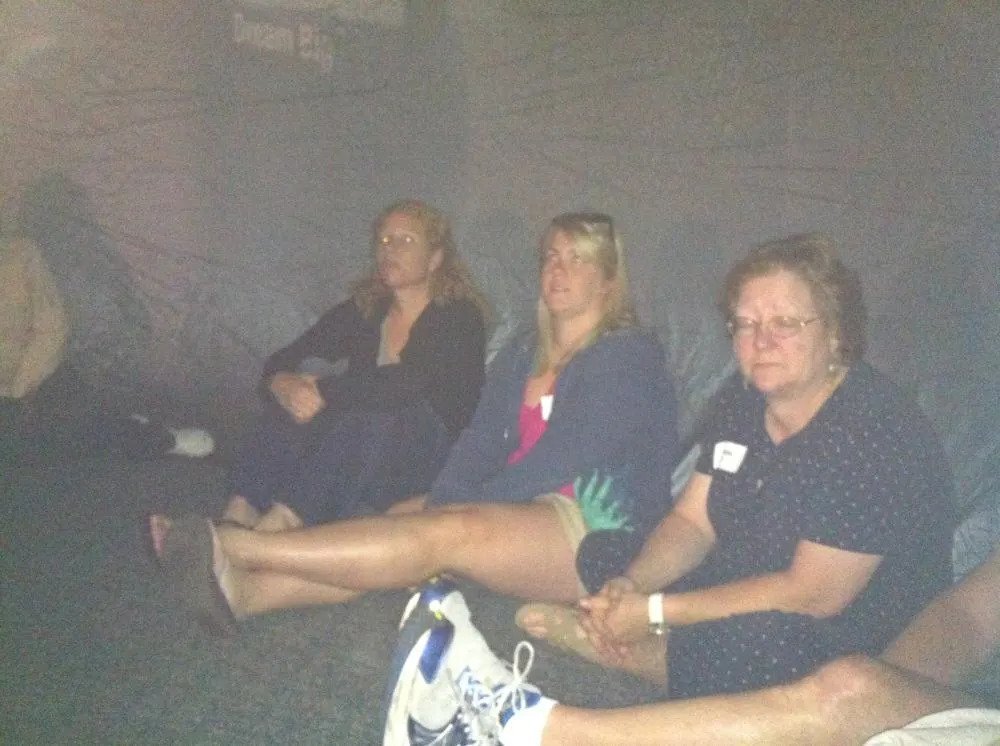
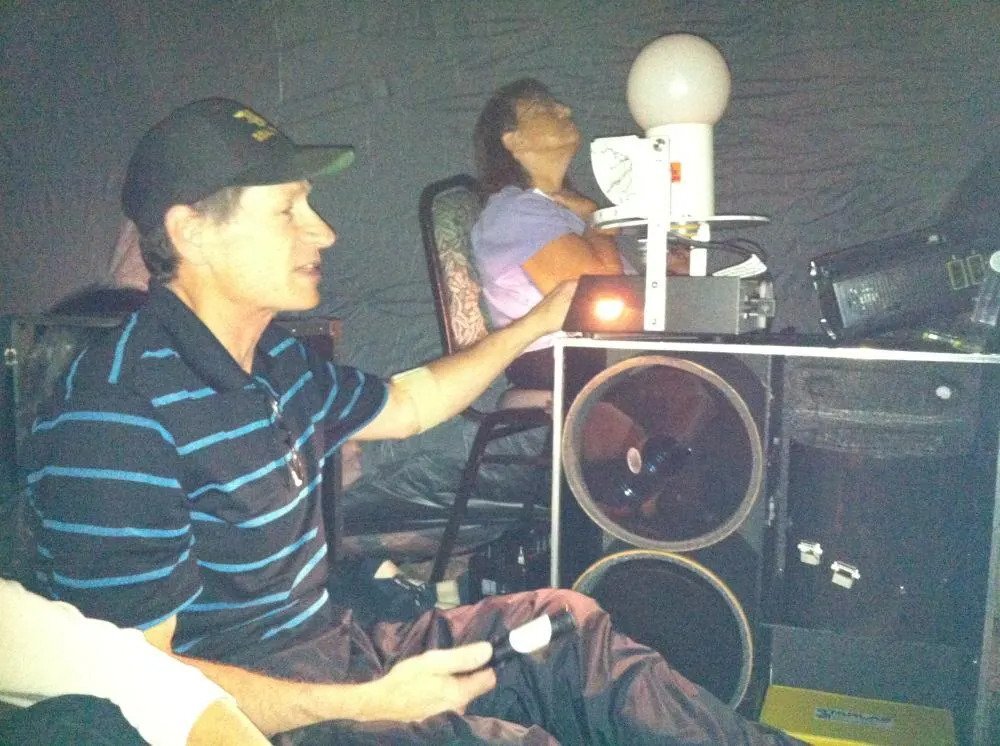
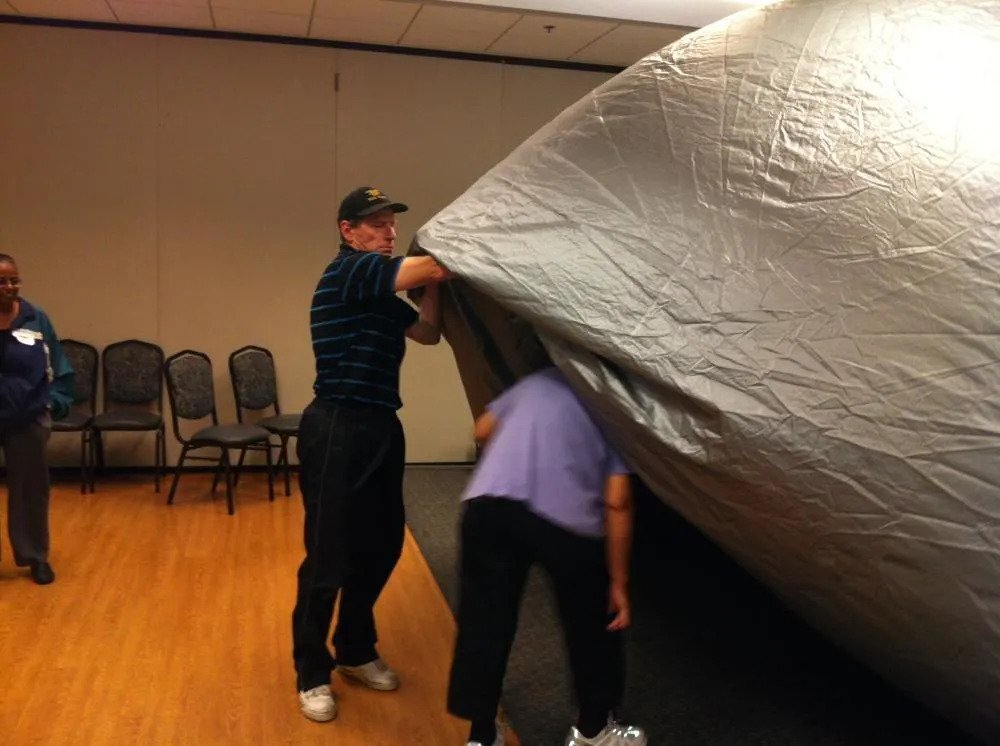
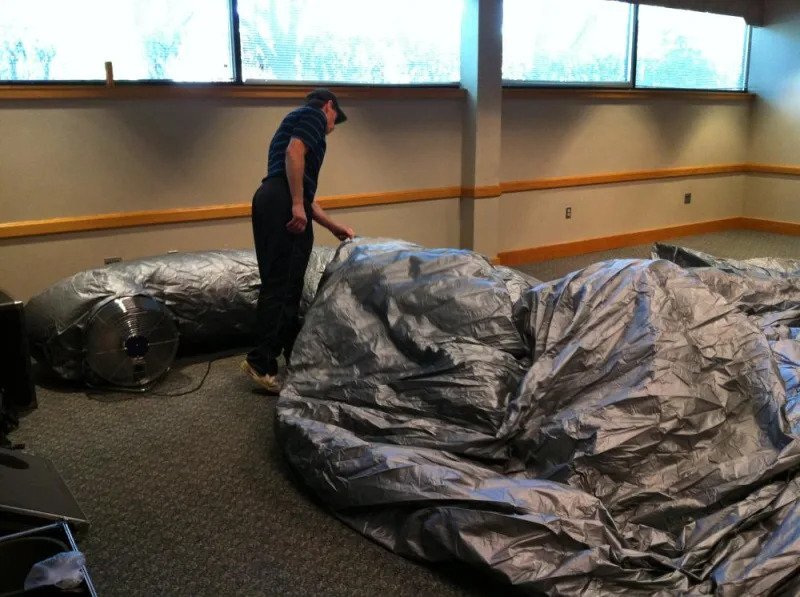
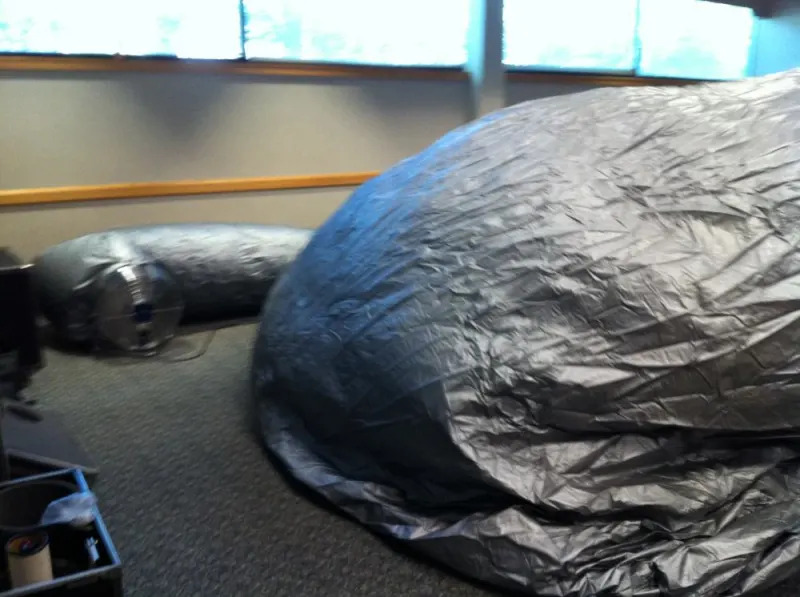
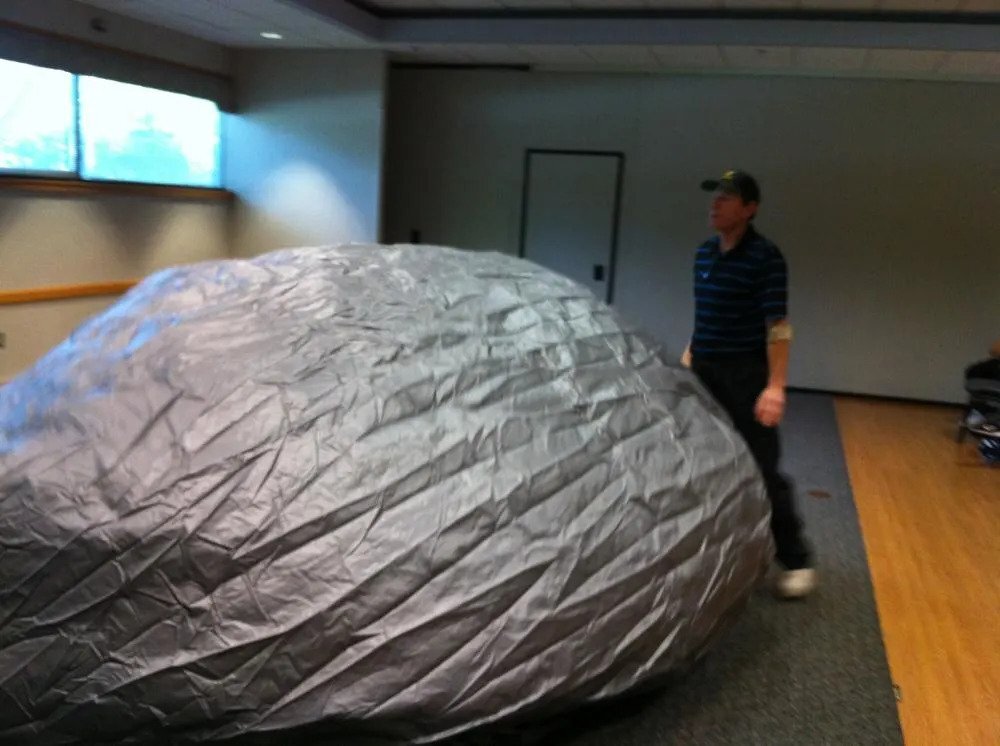
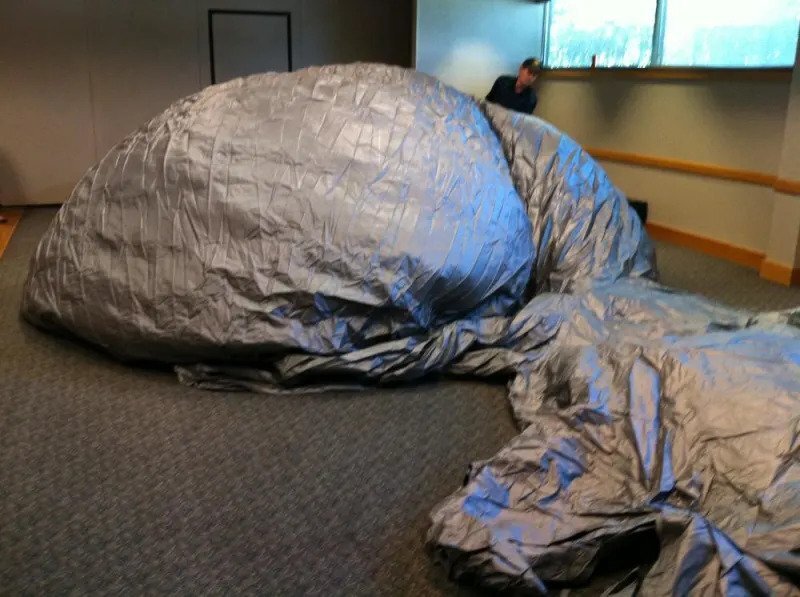
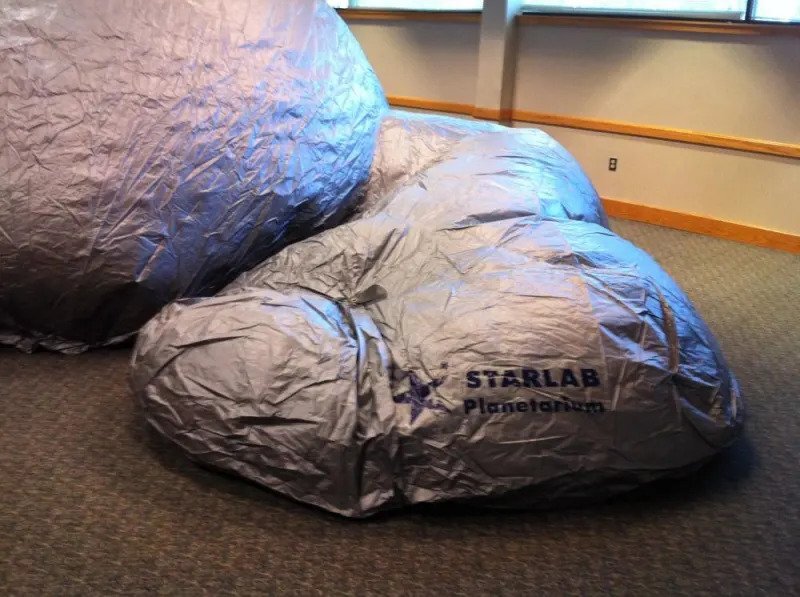
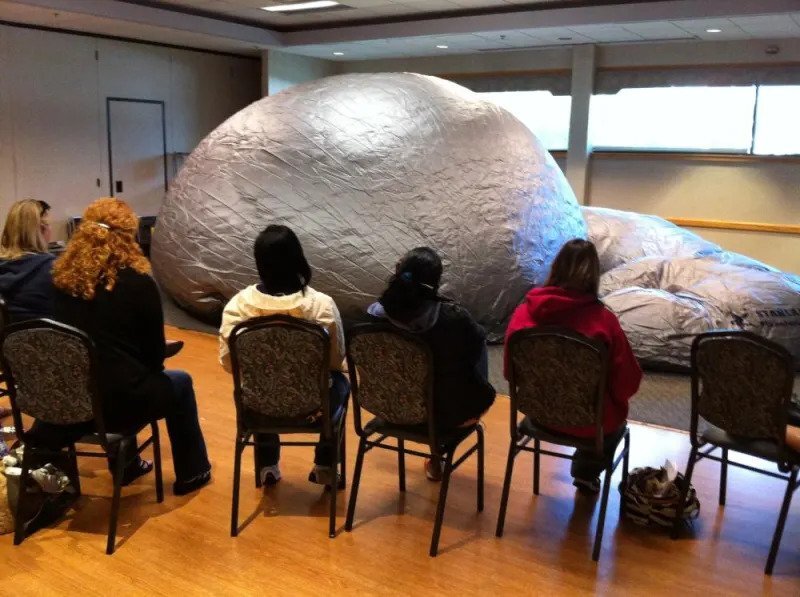
The Wayne County Math and Science Center owns two StarLabs, indoor planetariums, for the use of Wayne County teachers. In order to borrow a StarLab, you must be trained. Trainings are conducted as needed. For more information about StarLab training, please contact Latisha Porter.
The StarLab Website(opens in new window) provides comprehensive information about the system and its capabilities.
Instructional Videos on Using the StarLab
The South Carolina State Museum produced a series of training videos on using the StarLab. While some details are specific to their unit, the core operations apply to most StarLab models. Each video lasts between three and nine minutes.
- Overview and Unfolding the StarLab(opens in new window)
- The StarLab Fan and Inflating the StarLab(opens in new window)
- The Standard StarLab Projector(opens in new window)
- StarLab Cylinders and "The Yellow Box"(opens in new window)
- Inside the StarLab and Safety Outside the StarLab(opens in new window)
- Entering the StarLab, Deflating, and Packing Up(opens in new window)
You can also watch the entire process of setting up and tearing down(opens in new window) in this 25-second time-lapse video.
Classic StarLab Cylinder Manuals
The Wayne County Math and Science Center has 15 different cylinders available for use with your students.
- User Manuals for Starfield Cylinders(opens in new window): Provides detailed information on using specific cylinders.
- LED Projector and StarLab Guide(PDF, opens in new window)
Frequently Asked Questions
Find answers to common questions such as room requirements, capacity, setup time, and accessibility.
Starlab Photo Gallery
-
 Click to see a larger version
Skip to end of gallery
Skip to start of gallery
Click to see a larger version
Skip to end of gallery
Skip to start of gallery
-
 Click to see a larger version
Skip to end of gallery
Skip to start of gallery
Click to see a larger version
Skip to end of gallery
Skip to start of gallery
-
 Click to see a larger version
Skip to end of gallery
Skip to start of gallery
Click to see a larger version
Skip to end of gallery
Skip to start of gallery
-
 Click to see a larger version
Skip to end of gallery
Skip to start of gallery
Click to see a larger version
Skip to end of gallery
Skip to start of gallery
-
 Click to see a larger version
Skip to end of gallery
Skip to start of gallery
Click to see a larger version
Skip to end of gallery
Skip to start of gallery
-
 Click to see a larger version
Skip to end of gallery
Skip to start of gallery
Click to see a larger version
Skip to end of gallery
Skip to start of gallery
-
 Click to see a larger version
Skip to end of gallery
Skip to start of gallery
Click to see a larger version
Skip to end of gallery
Skip to start of gallery
-
 Click to see a larger version
Skip to end of gallery
Skip to start of gallery
Click to see a larger version
Skip to end of gallery
Skip to start of gallery
-
 Click to see a larger version
Skip to end of gallery
Skip to start of gallery
Click to see a larger version
Skip to end of gallery
Skip to start of gallery
Assessment Transition Timeline
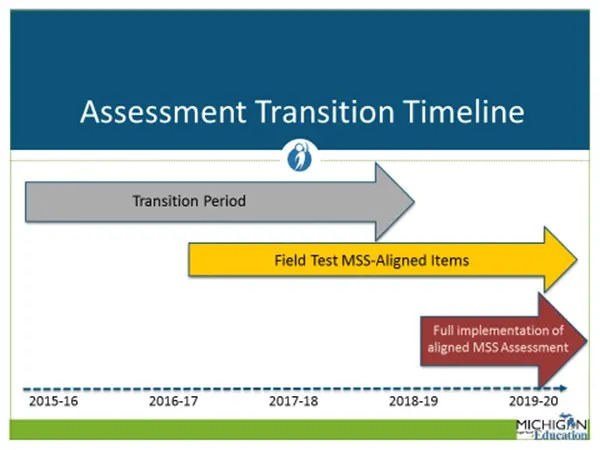 The M-STEP Science is a 3-Dimensional science assessment that is currently aligned to our new Michigan Science Standards (MSS). The MSS are the performance expectations (PE's) from the Next Generation Science Standards (NGSS). Please see timeline below.
- The M-Step for 5, 8, and 11th grade is currently aligned to our new Michigan Science Standards.
- The No Child Left Behind Act (NCLB) and state law require that we give a state science exam once in each grade band: elementary, middle, and high school. The Every Student Succeeds Act (ESSA) continues those same requirements.
- MDE will continue to give the SAT and the M-STEP Science and Social Studies for 11th Grade
The timeline for the New Michigan Science Standard assessment is:
Spring 2018 - New MSS aligned item clusters, Grades 5, 8, 11. This test will be a little shorter than future tests. (accountability based on participation)
Spring 2019 - New MSS aligned item clusters, Grades 5, 8, 11. (accountability based on participation)
Spring 2020 - Fully operational MSS assessment (Start High Stakes accountability) (Grades 5, 8, 11)
Major Shifts in Science Assessment
- Move assessment from Grade 4 to Grade 5, and move Grade 7 to Grade 8
- Practices embedded throughout
- Grade 11 and Grade 8 tests to assess the entire band of standards (6-8 for 8th grade test ; 9-12 for 11th grade test)
- Grade 5 test to assess 3-5 grade standards
Science Assessment Examples and Resources
The NGSS Assessment Padlet(opens in new window) provides assessment examples by grade span along with links to numerous assessment resources.
Michigan Science Assessments and High Stakes Accountability
Tentative Assessment Plan (subject to change)
- Spring 2018 Assessment -- Pilot 2 and 3 dimensional science items aligned to the new standards. Accountability based on student participation rates.
- 2019 -- Pilot 2 and 3 dimensional science items aligned to the new standards. Accountability based on student participation rates.
- 2020 -- Full implementation of the three-dimensional testing of the Michigan Science Standards.
Three Dimensional Science Assessment Resources
- Next Generation Science Assessment (NGSA) Project(opens in new window): Collaborative research to create 3D technology-based assessments. If you would like to try the Middle School Assessment Tasks(opens in new window) developed so far, please visit the Concord Consortium NGSS Assessments portal(opens in new window).
- The National Science Teaching Association (NSTA) provides additional support. Check out the Classroom Sample Assessment Tasks(opens in new window) for examples of how to integrate the three dimensions into summative assessments.
NGSS Evidence Statements
NGSS Evidence Statements provide educators with additional detail on what students should know and be able to do. These Evidence Statements are statements of observable and measurable components that, if met, will satisfy NGSS performance expectations.
The link above contains references to the Executive Summary, Introduction, and Overview, along with all specific evidence statements organized by grade level:
Science Assessment Item Collaborative
The Council of Chief State School Officers (CCSSO) brought together a group of interested states to create the Science Assessment Item Collaborative (SAIC). The purpose of this phase of work for the SAIC was to develop resources to support states in designing assessments aligned to the Next Generation Science Standards (NGSS). As you know, our newly adopted Michigan Science Standards are the Performance Expectations (PEs) from the NGSS.
In partnership with WestEd, the SAIC developed these resources:
- Item Cluster Prototypes(opens in new window): Grade 5 and Grade 12 item cluster prototypes.
- SAIC Assessment Framework and Item Specifications(opens in new window): Access the main collaborative site and guidelines via WestEd’s CSAA.
SAT, M-STEP Science Assessment and School Accountability
- Students who take the SAT will receive a science score (not used for school accountability).
- Students will also take the Science M-STEP (used for school accountability).
- The SAT science score can be used as part of the student's university application process.
- The SAT science score does not impact a school's accountability ranking.
- The Science M-STEP remains the primary measure for school accountability.
How will the M-STEP Science be factored into a school's status?
According to the Flexibility Waiver, Science M-STEP scores are included within a school's accountability. These scores are used in the identification and Top-to-Bottom Ranking for Priority Schools (but not for Focus School ranking). Because ELA and Writing were combined into a single assessment, the overall subject weightings have shifted.
Science does not count toward Focus School status. While it does impact Priority School status, it does so at a proportional rate based on the total number of tests administered in a building. For example, in a building with 300 total students across grades 6–8, there would be 300 Math tests, 300 ELA tests, 100 Science tests, and 100 Social Studies tests. In this scenario, Science would account for 1/8 (12.5%) of the overall ranking.
Please visit the MDE Student Assessment Website(opens in new window) for the latest assessment transition updates and weekly communications.
Accountability Resources
The Michigan Department of Education's district and school accountability initiatives are handled by the Office of Educational Assessment and Accountability (OEAA).
- Office Phone: (877) 560-8378
- Office Email: mde-accountability@michigan.gov
NGSS Sample Assessment
Achieve has released a resource called Classroom Sample Assessment Tasks(opens in new window). These tasks provide examples of how content from both the Next Generation Science Standards (NGSS) and the Common Core State Standards (CCSS) in Mathematics can be assessed together.
Each task focuses on a specific context or storyline and includes multiple components that work together to partially or fully assess a "bundle" of related standards. The goal is to provide educators with authentic ways to integrate NGSS and CCSS within classroom assessments. To support local development, the front matter of these tasks includes details on the development process so districts can create their own integrated math and science tasks.
The State Science Education Standards Comparison Tool is also available for download via the NGSS Resource Library(opens in new window). This tool assists states and districts in comparing the structure and intent of different sets of standards beyond a simple content "crosswalk."
NAEP
- NAEP Sample Science Questions(opens in new window)
- NAEP Interactive Science Computer Tasks(opens in new window)
- Smarter Balanced Assessment Portal(opens in new window)
NAEP Data Analysis
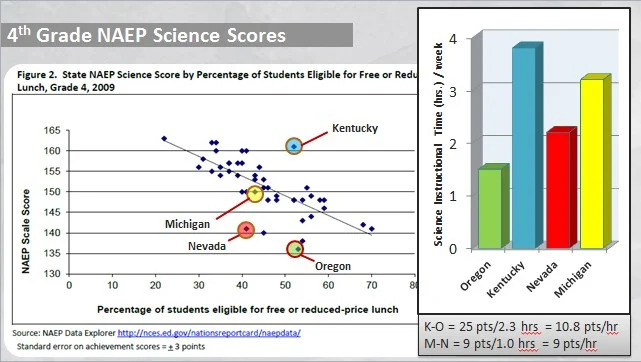
National Assessment of Educational Progress (NAEP) data suggests that socioeconomic status is a significant predictor of science success. However, outliers in the data reveal that instructional time may be an even more critical lever for student achievement.
- State Comparisons: Kentucky and Oregon have similar percentages of students qualifying for free or reduced-price lunch, yet Kentucky significantly outperforms Oregon. A primary difference is the time spent on science: Oregon averages 1.5 hours per week, while Kentucky averages 3.8 hours.
- The Michigan Gap: When comparing Michigan to Nevada, similar demographics would predict similar results, yet they are separated by nine points. Nevada provides nearly an hour more of science instruction per week than Michigan.
- The 4-Hour Goal: Projections suggest that if Michigan elementary classrooms increased science instruction to four hours per week, Michigan could achieve some of the highest NAEP scores in the country.
Panel Recommends New Breed of Assessments for Science and Learning
Laying out a new vision for science assessments, a panel of the National Research Council (NRC) proposed that states design testing systems that integrate several key types of science learning. This vision blends classroom-based assessments with state-level "monitoring" tests and gauges of students' "opportunity to learn."
The proposal offers an expert panel's ideas on how testing should change to fully reflect the Next Generation Science Standards. The picture it paints departs markedly from current assessment practice, which tilts heavily toward students' knowledge of science facts and typically takes place in one large-scale statewide exam each spring. Instead, the panel recommends that states obtain feedback from three distinct sources:
- Classroom-Based Assessments: Ongoing "formative" assessments that draw students into building and refining scientific models, generating and analyzing data, and creating oral and written arguments about their learning.
- State-Level Monitoring: Tests aimed at measuring how well students have learned the material over the course of a year, which can be used to meet state accountability needs.
- Opportunity to Learn: School-level information about resources that affect students' chances to learn science, such as access to high-quality instructional materials, teacher subject-matter expertise, and inclusive instructional approaches.
The Wayne County Mathematics and Science Center at Wayne RESA works with individuals and groups from the community to support our work. These include business, industry, cultural institutions and universities. These partnerships promote improved math and science education.
Community Resources
Crosswinds Marsh Wetland Interpretive Preserve
Crosswinds Marsh Wetland Interpretive Preserve
Crosswinds Marsh is a 1,050 acre Wetland Interpretive Preserve which offers a unique opportunity to observe a variety of wetland environments, including forested wetlands, wet meadows, shallow water wetlands and shallow water emergent wetlands. Crosswinds Marsh offers a blend of wetlands, wildflower meadows and upland forests, attracting over 200 species of birds, 30 species of mammals and a variety of reptiles, amphibians and fish.
Take I-275 to Will-Carleton Road (Exit #8). Take Will-Carleton/Oakville Waltz Road west 3 ½-miles to Haggerty Road. Take Haggerty Road ½-mile north to park entrance on the west side of the road.
Crosswinds Marsh Wetland Interpretive Preserve offers School Programs, Outreach Programs, Family Programs and Scout Badge Workshops focusing on the natural and cultural history of our area. Interpretive programs designed specifically for schools, scouts and families, feature hands-on activities, hikes, games and crafts to foster fun and informative learning experiences. We offer a variety of programs, but other topics can be provided upon request. On-site programs are offered April through October and outreach programs are offered throughout the year. The Parks Millage made these programs possible.
Friends of the Rouge
Friends of the Rouge promotes the restoration and stewardship of the Rouge River.
Nankin Mills Interpretive Center
Nankin Mills Interpretive Center
The Nankin Mills Interpretive Center is now open to the public and offers cultural, historical and natural science educational programming and exhibits for schools, scout groups and families. Nankin Mills Interpretive Center is located on Hines Drive, just east of Ann Arbor Trail in Westland, Michigan. Wayne County Parks is pleased to open the doors of Nankin Mills Interpretive Center to the public with exciting and informative exhibits for the whole family. Come visit their displays and explore the natural and cultural history of the Rouge River watershed. You will discover which animals still call our area home, and learn how the first people of Michigan lived closely with the land. The Rouge River was an important resource to the first settlers in the area and a gristmill was located here for 100 years. Henry Ford continued to utilize the water power on our site for one of his first Village Industry projects. So much local history to discover! Tour on your own, or call for a guided group tour appointment.
National Wildlife Federation
The National Wildlife Federation's mission is to inspire Americans to protect wildlife for our children's future. The NWF Great Lakes Natural Resource Center regularly works with Wayne County educators, organizations, and the public to provide educational resources on schoolyard habitats, wildlife, climate change, and the Great Lakes.
Orion's Quest
The Wayne County Math and Science Center is very lucky to be affiliated with Orion's Quest. This project provides students with the opportunity to do space research. The project was developed in Wayne County.
Rouge Education Project
The Wayne County Math and Science Center is a proud sponsor of the Friends of the Rouge/Rouge Education Project. Over 100 schools from Wayne and Oakland Counties participate in this water quality project.
The Detroit River International Wildlife Refuge
The Detroit River International Wildlife Refuge
The Detroit River International Wildlife Refuge is interested in partnering with Wayne County schools to do service-learning projects at the Refuge on invasive species removal, trail building and posting refuge signs.
The Greening of Detroit
One of our newest partners is The Greening of Detroit. Their mission is to guide and inspire the growth of a "greener" Detroit through planting and educational programs, environmental leadership, advocacy and by building community capacity.
Cultural Institution
Ann Arbor Hands-On Museum
A wonderful experience for hands-on science for children is at the Hands-On Museum.
Cranbrook Institute of Science
Cranbrook Institute of Science
The theme of the Cranbrook Institute of Science is "Connecting Us to Our World and the Universe Beyond."
Detroit Zoo-Conservation and Education
Detroit Zoo-Conservation and Education
The Wayne County Math and Science Center has a very good friend in Kim Sneden at the Detroit Zoo.
Michigan Science Center
The Michigan Science Center provides wonderful experiences for "kids of all ages."
Citizen Science
Citizen Science Opportunities
The web offers many exciting opportunities for classes to get involved in REAL science! Here are some great starting points to help you think about how to incorporate these opportunities into your curricula!
Sci Starter
An easy-to-use menu for searching for science projects to get involved in, utilizing categories like at home, at night, at the beach, etc. You can also select items by science topic.
Zooniverse
This site is self-described as, "home to the internet's largest, most popular and most successful citizen science projects." The most popular project on this website is Galaxy Zoo. All of these projects appear to be Space-based and will have you analyzing Hubble Telescope images, finding stars from IR image data, exploring the surface of the moon or Sun, or my favorite, searching for evidence of planets around Stars!
Specific Projects to Highlight
Students' Cloud Observations Online (S'COOL)
The project aims to collect data on cloud type, height, cover, and related conditions from all over the world. Observations are sent to NASA for comparison to similar information obtained from satellites.
Globe at Night
Help contribute to a database collecting information about light pollution. This is an easy one to do!
Citizen Science Projects
Research often involves teams of scientists collaborating across continents. Now using the power of the Internet, non-specialists are participating too. Citizen Science falls into many categories. A pioneering project was SETI@Home, which has harnessed the idle computing time of millions of participants in the search for extraterrestrial life.
Citizen scientists also act as volunteer classifiers of heavenly objects, such as in Galaxy Zoo. They observe the natural world, as in The Great Sunflower Project. Scientific American will add projects regularly.
Wayne County Green Schools
What is a Michigan Green School?
Michigan Green Schools supports and celebrates the achievements of PreK-12 schools in protecting the state's air, land, water, and ecosystems through their commitments to environmental education and stewardship actions.
Previously operated as a non-profit 501(c)3 agency, the program's operation transferred to the Michigan Department of Environment, Great Lakes, and Energy (EGLE) in 2021.
Science Consultant Contacts
Really important content
Professional Development