
Wayne County Master Science Teacher Fellowship (MSTF)
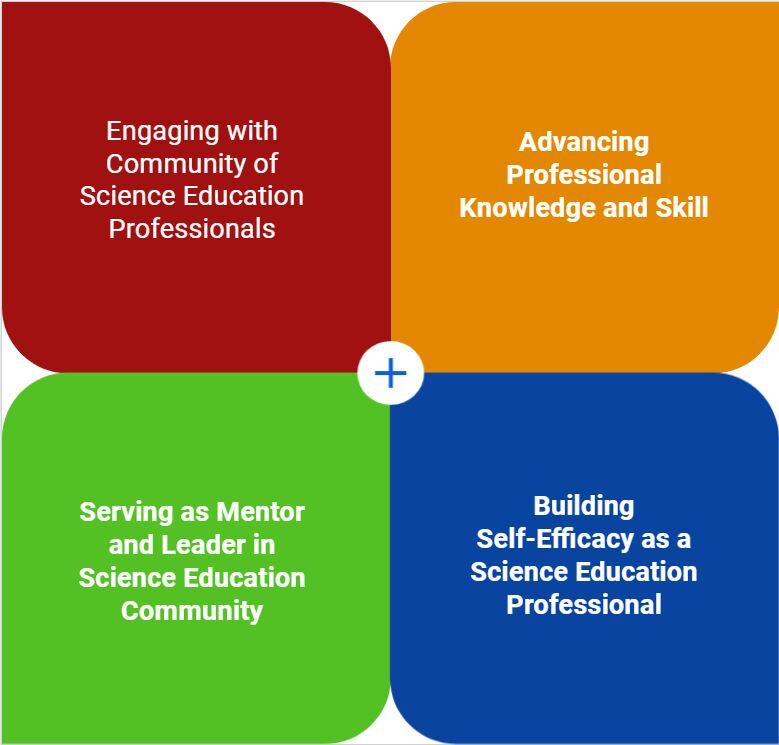
The goal of the Master Science Teacher Fellowship is to provide professional learning experiences that facilitate science teachers' growth in their professional knowledge and practice, enable them to become effective mentors and coaches, and support their development as instructional leaders within their schools, districts, and the science education community.
About the Master Science Teacher Fellowship
- Engaging with Community of Science Education Professionals
- Serving as Mentor and Leader in Science Education Community
- Advancing Professional Knowledge and Skill
- Building Self-Efficacy as a Science Education Professional
The Master Science Teacher Fellowship is an opportunity to join a community of science educators who learn, lead, and grow together. Wayne RESA understands that teaching is a complex endeavor and aims to create a countywide network of skilled educators and mentors to advance science education throughout the 21st century.
The MSTF is looking for candidates who want to grow their content knowledge, seek to learn and implement evidence-based classroom practices, and become mentors and leaders in science education.
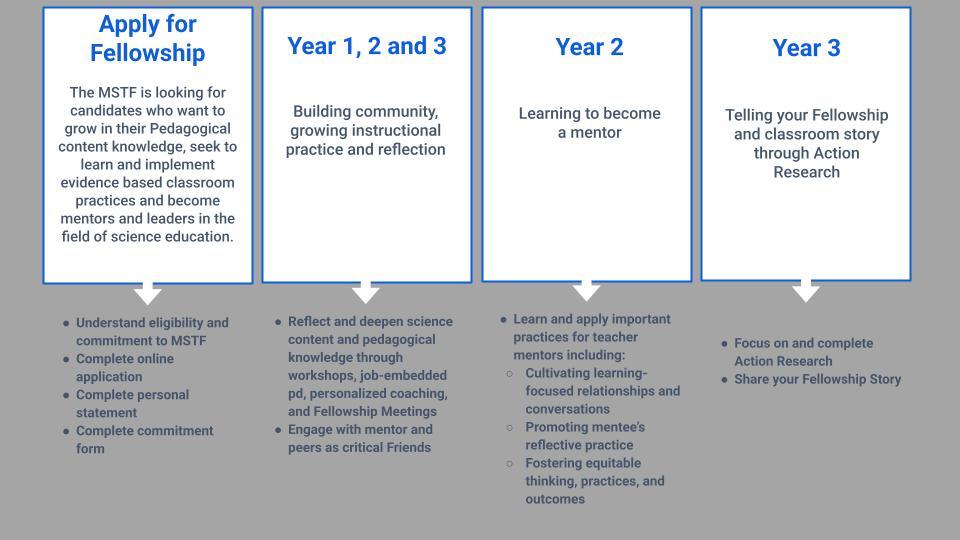
MSTF Roadmap
- Apply for Fellowship
- Understand eligibility and commitment to MSTF
- Complete online application
- Complete personal statement
- Submit commitment form
- Years 1–3: Building Instructional Practice
- Build community and instructional practice through reflection
- Deepen science content and pedagogical knowledge
- Participate in workshops, job‑embedded professional development, and coaching
- Engage with mentors and peers as critical friends
- Year 2: Developing Mentorship Skills
- Learn and apply practices for teacher mentors
- Cultivate learning‑focused relationships and conversations
- Promote mentee reflective practice
- Foster equitable thinking, practices, and outcomes
- Year 3: Action Research
- Focus on and complete Action Research
- Share Fellowship and classroom story
MSTF Micro-Credential System Outline
Learning Experiences
MSTF learning experiences consist of workshops, job-embedded professional learning through Classroom Learning Labs, Studio Days, and individualized coaching cycles, book studies, and Fellowship meeting discourses with peer Fellows as critical friends in reflection.
Micro-Credential
A micro-credential captures and communicates that an individual has reached a level of applied proficiency in the standards by satisfactorily applying their learning based on a defined rubric.
MSTF Certification
To earn the MSTF certification, a Fellow must complete the 4 core MSTF micro-credentials that demonstrate proficiency in applying skill sets in a classroom environment. Fellows will provide final evidence through an action research project that will demonstrate the Fellows capacity to implement high leverage and ambitious science teaching practices with students through reflective inquiry.
Micro-Credential Badges
 | Great teaching can be learned. The Ambitious Science Educator will anchor instruction with puzzling phenomena, engage groups of students and the whole class in discourse to get students thinking deeply with each other publicly, and wrap investigations in science practices to support students in the practice of sensemaking. |
 | Assessment should be meaningful and actionable. Fellows will become assessment literate, develop a theory of classroom assessment, build their classroom assessment microsystem, and use actionable data to grow students, resources, and practice. |
 | Fellows will study the art and science of being a reflective practitioner. Using tools, protocols and routines, the Fellows will continually reflect on classroom practices that include pedagogy, assessment, and collaboration. |
 | Leaders are those that empower others. Fellows will work to empower others in mentorship and discourse to make a difference in their classrooms, districts and communities. |
Fellowship meetings are held monthly.
Meetings will be held both virtually and face to face. Fellows come together to learn, share and grow.
Fellows leading Fellows
At the core of the Fellowship meetings are teaching Fellows sharing their work and experience with their peers.
Learning both in content and Practice
Fellowship meetings will provide an opportunity to grow in content knowledge and awareness, explore connections across science disciplines and considerations for classroom implementation.
Learning from others
Opportunities to engage with and learn from others in the fields of science and education.
Summer workshops
4-day workshop experiences
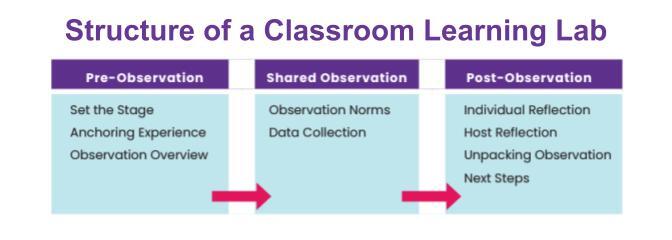
GOAL
Opportunity for MSTF Fellows to experience in-depth, professional thinking and learning around the craft of teaching within a collaborative community.
Coaching/Planning Conversation Prior to Classroom Learning Lab
- The Classroom Learning Lab Facilitator arranges for a prep/planning/coaching conversation prior to the lab day.
- The Learning Lab Facilitator helps the host teacher focus the lesson that exemplifies the target behaviors and the identified goal
Pre-Observation Conversation – Pre-brief
- Welcome – FacilitatorHost Teacher shares their intentions for teaching the lesson, student learning, and also the pre-observation work that students may have had.
- Network guests select individual focus intentions for the CLL Observation – share with group and host teacher.
- Host teacher leaves to prepare students for the day.
- Guests review observation and note-taking format using the Classroom Learning Lab Observation form.
- Norms on Classroom Learning Lab form – Review and set an intention for yourself – share with a partner.
- Silence cell phones and move to the classroom.
Observation
- Try to stand off to the side or back of the room. Be prepared to shift quietly as needed.
- Share a rotation of 3 people moving about the classroom to capture student / teacher evidence.
- Keep track of evidence of student learning and the craft of teaching. Jot down questions you might have.
Post-Observation Conversation – Debrief
Each participant writes down what they noticed and wondered about on the Guest Reflection form, Host teacher completes the Host Reflection form.
Studio Days
Developed at the University of Washington and the Ambitious Science Teaching Project, Studio Days are a form of job-embedded professional development that takes place during a school day. School teams develop a vision of “what is possible” in instruction and to take principled risks with practices.
Multiple role-actors (classroom teachers, coaches, administrators, and researchers) collaborate to provide real-time feedback within current lessons. Although Studio Days feature a wide variety of science content, the goal of each science studio day is the same: to support students in improving explanations, models, and arguments of scientific phenomena. Prior to the studio, the MSTF advisor and mentor will facilitate a planning meeting with teachers from a school to design a unit of instruction and lessons for the following studio day. On the day of the studio, teachers and others attending studio days engage in multiple rounds of co-planning, co-teaching, and co-debriefing.
Instructional Coaching/Impact Cycles
Fellows will work with their advisor/mentor through multiple cycles of learning, action, and reflection to shift and improve classroom instruction to more closely align with the MSTF Standards of Practice and with students’ abilities to engage in 3-dimensional sensemaking of phenomena.
FAQ's
Frequently Asked Questions
Requirements
- Current and certified secondary science teacher or elementary teacher within Wayne County
- 60% or more of classes must be in science courses if you are a secondary teacher. If elementary, science must be a core discipline in your weekly schedule
- Fellows must agree to the commitment of the MSTF
Commitments
- Willingness and ability to agree to all terms and conditions required for participation for the full duration of the three‑year program
- Currently employed and certified as a secondary science teacher or a grades 3–5 elementary teacher within Wayne County
- If a secondary teacher, at least 60% of teaching assignment must be science courses; if elementary, science must be a core discipline in the weekly schedule
- Between 3 and 15 years of teaching experience
- Commitment to teaching in a Wayne County school for the duration of the program
- Willingness to share classroom teaching practices through video and audio recordings, interviews, and reflection
- Use of a high‑quality rated curriculum, or the capacity and ability to modify existing curriculum to meet Michigan Science Standards (NGSS)
- Ability to obtain recommendations from a direct supervisor and a peer (teacher or coach)
- Commitment to improving student achievement
- Participation in all learning experiences, including:
- Attending at least 80% of Fellowship meetings over the three‑year program
- Attending all workshops and field learning experiences
- Participating in book studies
- Participating in coaching cycles
- Participating in Classroom Learning Labs and Studio Days
- Sharing relevant student data within the program
- Hosting or co‑hosting at least one Fellowship meeting during the three‑year program
- Inviting other teachers and Fellows into the classroom for Classroom Learning Labs or Studio Days
- Working closely with a Wayne County RESA Science Education Consultant who will serve as an advisor, mentor, and coach
- Sharing the practices, progress, and story of the Fellowship experience with other educators
- Hosting and/or participating in a Classroom Learning Lab or Studio Day at least once per year
- Completion of Critical Reflections in Years 1 and 2 and an Action Research Project in the final year of the program
Benefits
Mentoring and Coaching
Science education is a challenging profession that requires consistent reflection and is greatly enhanced by feedback, which is why we ensure Fellows have access to an advisor and mentor throughout the Fellowship. Our mentors regularly check in with Fellows, support them in planning and reflecting on instruction, talk them through challenging professional dilemmas, and support them through personal challenges. Mentors also observe Fellows teach, either virtually or in person, and coach them to make Fellow-directed improvements.
Community Membership
MSTF Fellows can tap into a support network of peers committed to improving education. Each year, this network will grow in size. From in-person conversations at meetings to virtual conversations in our online community, being part of the MSTF network means that resources and support from a wide range of innovative and committed professional teachers are always available.
Certification
Fellows will earn micro-credentials and an MSTF Certification upon completion of the 3-year Fellowship. These micro-credentials and the Wayne County Master Science Teacher certification are backed by SCECHs and are aligned with MDE guidelines for science instruction in the State of Michigan.
Financial Support
Upon completion of micro-credential reporting, Fellows may earn up to a $1,000 stipend per year. All courses in the Fellowship will be supported by our funders, and any substitute-teacher costs associated with “Studio Days” will also be covered.
Submit a Referral
Do you know someone who is starting their career as a science teacher? If so, the Master Science Teacher Fellowship could be the opportunity of a lifetime. Please fill out the below form to refer a potential Fellowship applicant. Once you submit this form, an email about the Master Science Teacher Fellowship will be sent to the prospective Fellow.
MSTF Action Research Project
Classroom Action Research
Each Fellow will be provided with the book Action Research Guidebook: A Process for Pursuing Equity and Excellence in Education to support the classroom action research portion of the portfolio project. Fellows are expected to use the guidebook as they develop and carry out their action research, following the Action Research Cycle described in the text.
Writing Component
The Action Research Guidebook contains all required elements for the writing component of this segment.
Chapter 10 (pages 184–195) describes the required elements in detail and includes tools to support a successful research process. Resource D, Sample Abbreviated Action Research Reports (pages 218–245), may be used as a reference when writing the classroom action research portion of the portfolio.
As outlined in the guidebook, the classroom action research report must include the following components:
- Explanation of context, problem, and issue
- Theoretical perspective
- Research design
- Analysis of data
- Action planning
Video Component
Fellows must use video evidence for data collection and analysis.
- Fellows will determine which aspects of their ambitious science teaching practices will benefit from video analysis.
- Video analysis tools may be found in MSTF documentation.
- Fellows must submit three video samples collected over the course of the Action Research Cycle.
- All video submissions must follow the guidelines outlined in the Capturing Student Video section of this document.
Analyzing Student Work and Implementation of Ambitious Teaching Practices
The student work or data selected for analysis will be determined by the Fellow as they develop their action plan and engage in the Action Research Cycle.
- Fellows will select appropriate tools to analyze student work or other forms of student data.
- Reflection tools may be found in the Action Research Guidebook and MSTF documentation.
- All student work must be included in the portfolio submission and must follow anonymity guidelines outlined in this document and the guidebook.
Action Research Evaluation
The action research project will be evaluated using the rubric linked below.
The Fellow’s portfolio must demonstrate proficiency in each category of the rubric.
Fellows whose research projects do not meet proficiency in all rubric categories will not earn Wayne County Master Science Teacher Certification.
Fellows may resubmit their portfolio within one year.